

Teams & fairness
The Fairest Way to Pick Teams for a Pickup Game
 Sumit Pokhrel, Founder of Jum · 4 min read
Two captains taking turns picking players before kickoff isn't fair, it's just fast. Here's a better way to build balanced teams for a casual game.
Draw teams at random from confirmed attendees only, then allow a manual adjustment for a genuine skill mismatch. Randomizing first removes unconscious bias; adjusting second keeps room for real judgment — and publishing the roster before kickoff avoids reshuffling once people arrive.
Photo: Noel Snpr, Pexels
Every group has lived this moment: five minutes before the game starts, two people get nominated captains, and picking begins. It's quick, and it feels normal because it's what everyone grew up with. It's also, if you actually look at it, a pretty rough way to sort a group of friends — someone always ends up picked last, in front of everyone, and it happens again next week.
Why ad hoc picking doesn't actually produce fair teams
The captain-picks method has three structural problems, not just a social one:
- It runs on incomplete information. A captain only really knows how the six or seven people they've personally played with perform — not the other fifteen.
- It has no memory. Nobody's tracking who was on the winning side the last four weeks running, so the same strong pairing quietly stacks the same team over and over without anyone intending it.
- It's socially loaded. Being picked last, out loud, in front of the group, is a genuinely bad experience for a casual or newer player — and it's the kind of thing that quietly makes someone stop showing up.
What actually makes teams feel fair
Fair doesn't mean perfectly balanced on some hidden skill rating — it means the process feels fair to everyone standing on the pitch. That comes down to a few things:
- Pick from who's actually confirmed, not a guess of who might turn up — there's nothing worse than building teams around three people who never show.
- Randomise as the default, rather than reputation-picking, so bias doesn't creep in even unintentionally.
- Allow a manual adjustment for a known mismatch, without turning it into a public negotiation in front of the group.
- Lock and publish the roster before anyone arrives, so there's no last-minute reshuffling once people are already on the pitch.
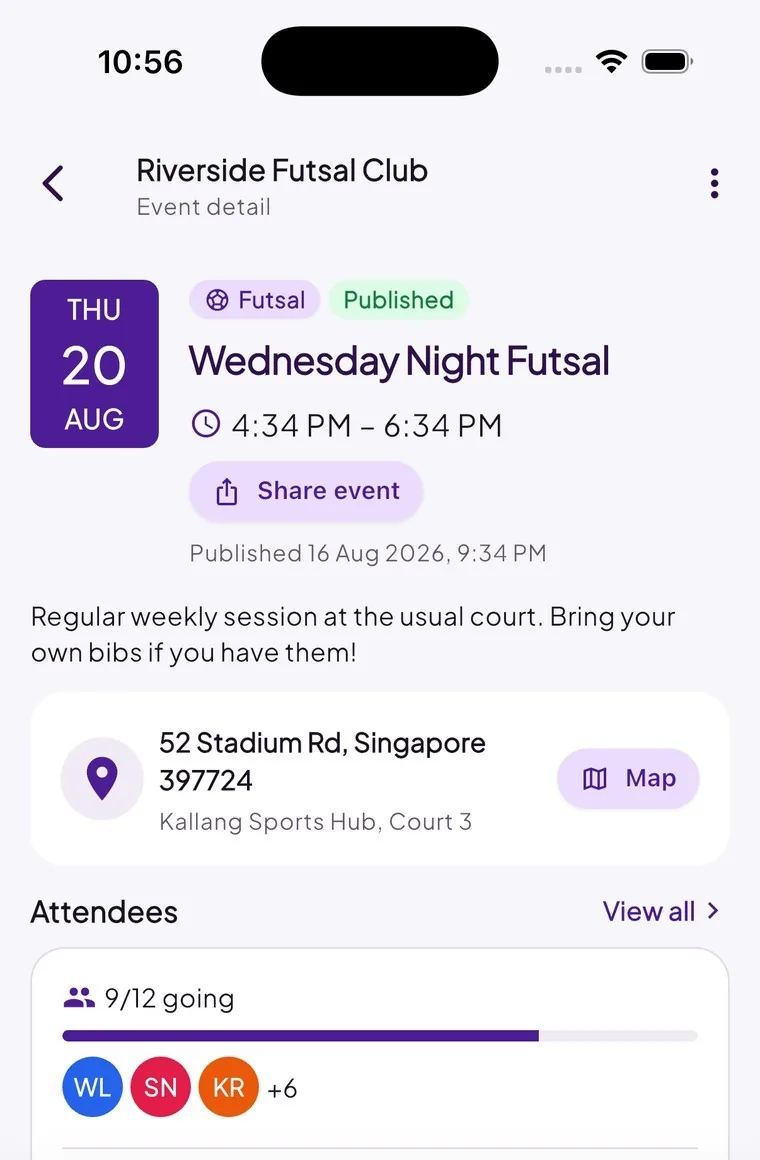
Once RSVPs are in, Jum auto-assigns balanced teams from who's actually confirmed as going — not a guess. An Admin can drag anyone across manually if there's a real reason to, then publish the roster so everyone sees which side they're on before they even arrive.
The goal isn't to remove the human judgment entirely — it's to remove the parts that don't need to happen live, in public, five minutes before the game.
Quick questions
What's a fair way to pick teams without captains?
Draw teams at random from confirmed attendees, then allow a manual adjustment only for a clear skill mismatch — removing reputation bias from the process while keeping room for judgment.
Should teams be picked before or after RSVPs close?
After — picking from unconfirmed players means rebuilding teams on the day once no-shows appear.
Can team picking be biased even without meaning to be?
Yes — a captain who's only played with a subset of the group will unconsciously favor familiar players, which is why randomising first and adjusting second produces fairer results than picking from scratch.
See how team formation works → Walk through the full event flow →