

Money & fairness
How to Split Court Costs Fairly, Every Week
 Sumit Pokhrel, Founder of Jum · 4 min read
Splitting the cost of a court, pitch or shuttlecocks shouldn't take longer than the game did. Here's how to do it fairly, every single week.
Log each cost the moment it's paid and attribute it to whoever paid. Split it only among the people actually liable — those who showed up, excluding anyone who already covered their own share — and settle from one shared ledger instead of chasing individual transfers.

Someone always ends up fronting the money. The court deposit, the shuttlecock tube, the extra bibs — it goes on one card, and then, somewhere after the game, the group has to work out who owes what. If your group has been doing this for more than a few weeks, you already know how that part usually goes: a paragraph in the chat nobody fully reads, a few people paying late, and one person quietly becoming the group's unofficial treasurer.
The money itself is rarely the problem. Ten dollars a head isn't a lot. What actually breaks down is memory and awkwardness — remembering who paid, who already covered their share, who brought a guest that isn't in the usual split, and then having to personally chase three different people for a bank transfer.
The patterns that don't scale
Most groups land on one of a few workarounds, and all of them eventually crack:
- One permanent payer. Works fine for a month, then quietly becomes a source of resentment — that person is now debt-collecting from their own friends every week.
- Rotating payer. Fairer in theory, but nobody tracks the running history, so it's impossible to tell if the rotation is actually even over a few months.
- Flat equal split, no exceptions. Falls apart the moment someone no-shows, leaves early, or brings a guest who should be covering their own share.
What a fair split actually requires
Underneath all of this, a fair split needs four things to be true at the same time:
- The expense is logged the moment it happens, attributed to whoever actually paid — not reconstructed from memory two days later.
- The cost is split only among the people who are actually liable for it — the people who showed up, not everyone who RSVP'd, and excluding anyone who already covered their own cost separately.
- There's one shared ledger everyone can check any time, instead of a scroll-up archaeology dig through old messages.
- Settling up is one clear step, not a dozen separate private transfers that each need their own confirmation.
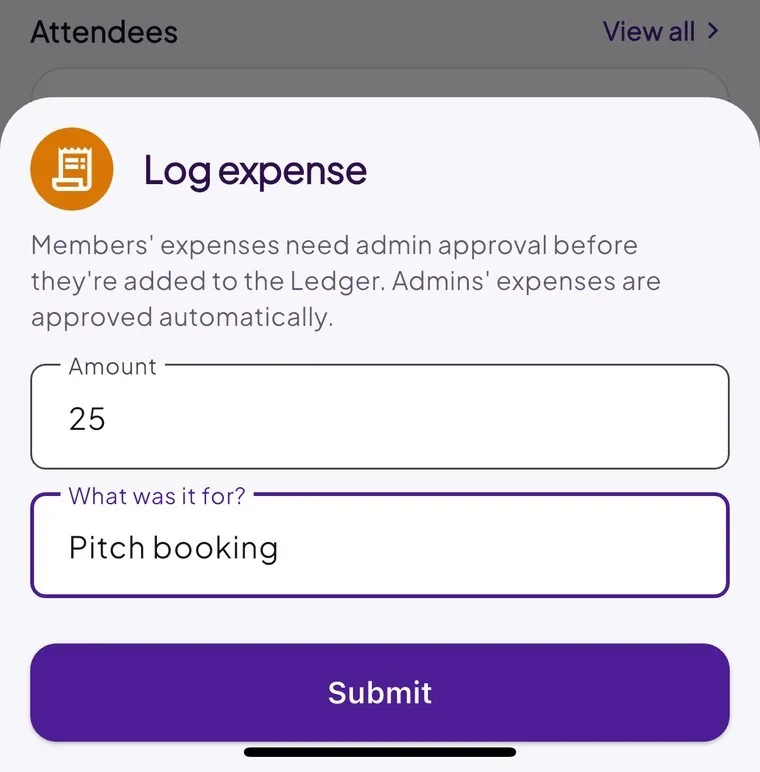
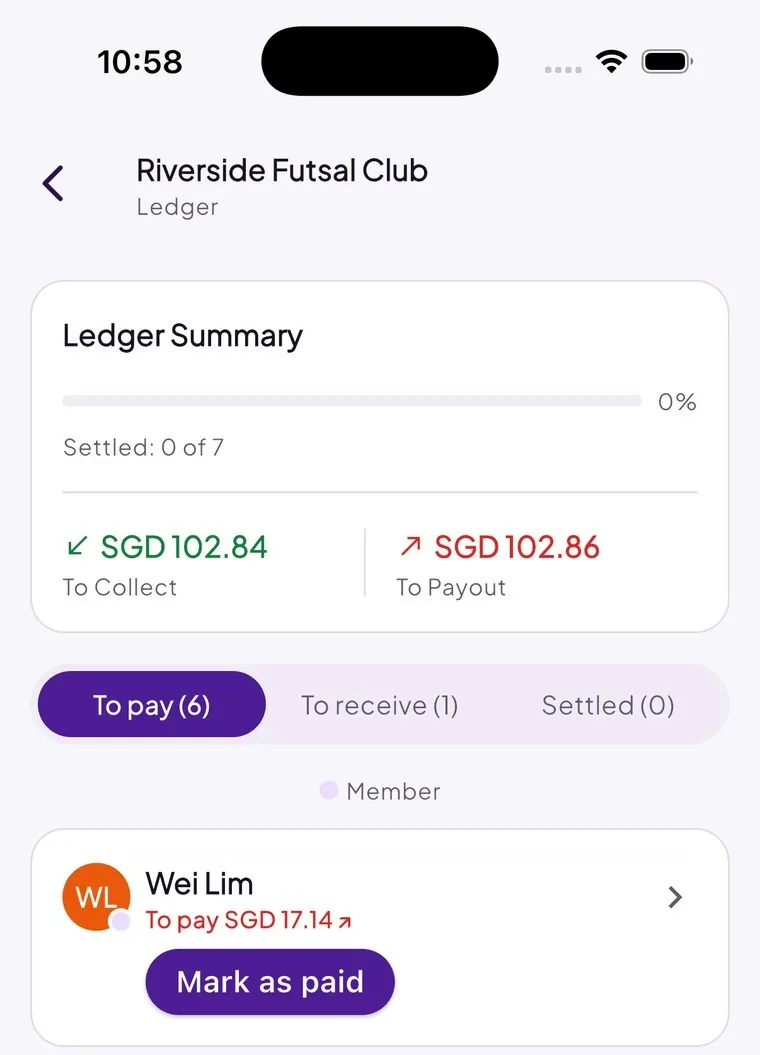
Whoever pays logs the expense right away, an Admin approves it, and it's automatically added to the event total. Jum splits it only among the people it should — automatically excluding anyone who's already covered a cost themselves — and keeps one running ledger per event so nobody has to ask "wait, did I already pay for this?"
None of this needs to be complicated. It just needs to happen at the right moment — logged when it's paid, split against who actually showed up, and visible to everyone without anyone having to ask.
Quick questions
What's the fairest way to split sports expenses?
Log each cost the moment it's paid, split it only among the people actually liable for it (not everyone who RSVP'd), and settle from one shared ledger instead of individual transfers.
Should latecomers or no-shows pay the same share?
No — a fair split only charges the people who actually showed up and used the booking, which is why the split should happen after attendance is confirmed, not before.
What if someone brings a guest?
The guest's share should be billed to whoever brought them, not spread across the whole group by default.
See the full RSVP-to-settlement flow → Read about expense tracking →