

Top of funnel
WhatsApp Is Not a Sports Admin Tool. Here's Where It Breaks.
 Sumit Pokhrel, Founder of Jum · 5 min read
WhatsApp is great for banter. It was never built to track RSVPs, split costs or remember who owes who. Here's exactly where it breaks down.
You don't need to fully replace WhatsApp. Keep it for banter, and add a dedicated tool for the parts a chat log can't handle: live RSVP counts, team rosters, and a shared expense ledger — the five things below are exactly where a plain group chat runs out of road.

Photo: Anh Lee, Pexels
This isn't a knock on WhatsApp. It's genuinely the right tool for the one job it's good at: reaching everyone in the group, instantly, with zero setup. That's exactly why every casual sports group ends up running on it. The problem is that organising a recurring game needs more than a chat log — it needs a system that remembers things — and that's the part WhatsApp was never built to do.
Here's where it actually falls apart, in the order you'll hit it during a normal week:
1. Counting RSVPs
A thumbs-up reaction buried under forty other messages isn't a headcount, it's a guess. There's no live count, no waitlist once the game fills up, and no way to tell who saw the message versus who actually confirmed.
2. Bringing new people in
Every new player has to be manually walked through the venue, the cost, the rules, and the etiquette — usually by whoever's patient enough to retype it for the fifth time this month. Nothing about a chat "onboards" someone.
3. Sorting teams
This happens live, out loud, five minutes before kickoff, and gets re-litigated from scratch every single week because nothing from last week carried over.
4. Tracking the money
Someone fronts the cash, then posts a wall of "so Sam owes $6, Priya owes $4..." that maybe two people actually read properly. From there, who's paid and who hasn't is tracked entirely by trust and memory.
5. Answering last month's question
"Didn't we agree Tuesdays don't work anymore?" Finding out means scrolling back through weeks of unrelated banter to find the one message that actually mattered.
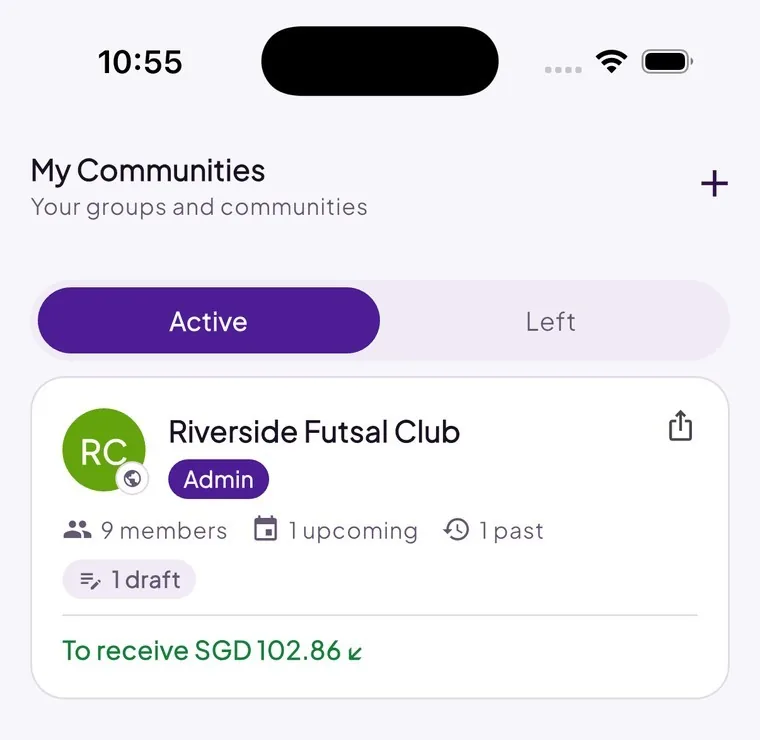
Jum isn't trying to replace the group chat — WhatsApp should stay exactly where the banter happens. It just takes on the one job a chat log was never built for: being a system of record for the parts that need to be remembered — RSVPs, teams, expenses and who's settled up.
None of these five things are WhatsApp's fault. They're just outside what a chat log can reasonably be expected to do. The fix isn't a better way to type it into the chat — it's giving those five jobs a place that actually remembers them.

Quick questions
What's the best WhatsApp alternative for organising a sports group?
You don't need to fully replace WhatsApp — keep it for banter, and add a dedicated tool for the parts a chat log can't handle: live RSVP counts, team rosters, and expense tracking.
Why doesn't WhatsApp work well for tracking who paid?
Because it relies on everyone reading and remembering a text summary — there's no shared, always-current record of who's settled and who hasn't.
Can a WhatsApp group still work alongside an organising app?
Yes — that's the intended setup. The chat stays the social layer; the app becomes the system of record for RSVPs, teams and money.
Read why Jum exists alongside your group chat → See the full flow, start to finish →