

Teams & fairness
Pickleball Round Robin, Without the Whiteboard: A Fairer Way to Rotate Partners
 Sumit Pokhrel, Founder of Jum · 4 min read
Chalk marks on a whiteboard, or everyone just shouting "next up" — most casual pickleball groups rotate partners the hard way. Here's a fairer, faster way to do it.
Draw the rotation from players actually on site and waiting, not a guess of who's around, and randomize who partners with who by default so the same two strong players don't keep landing on the same side every single game.
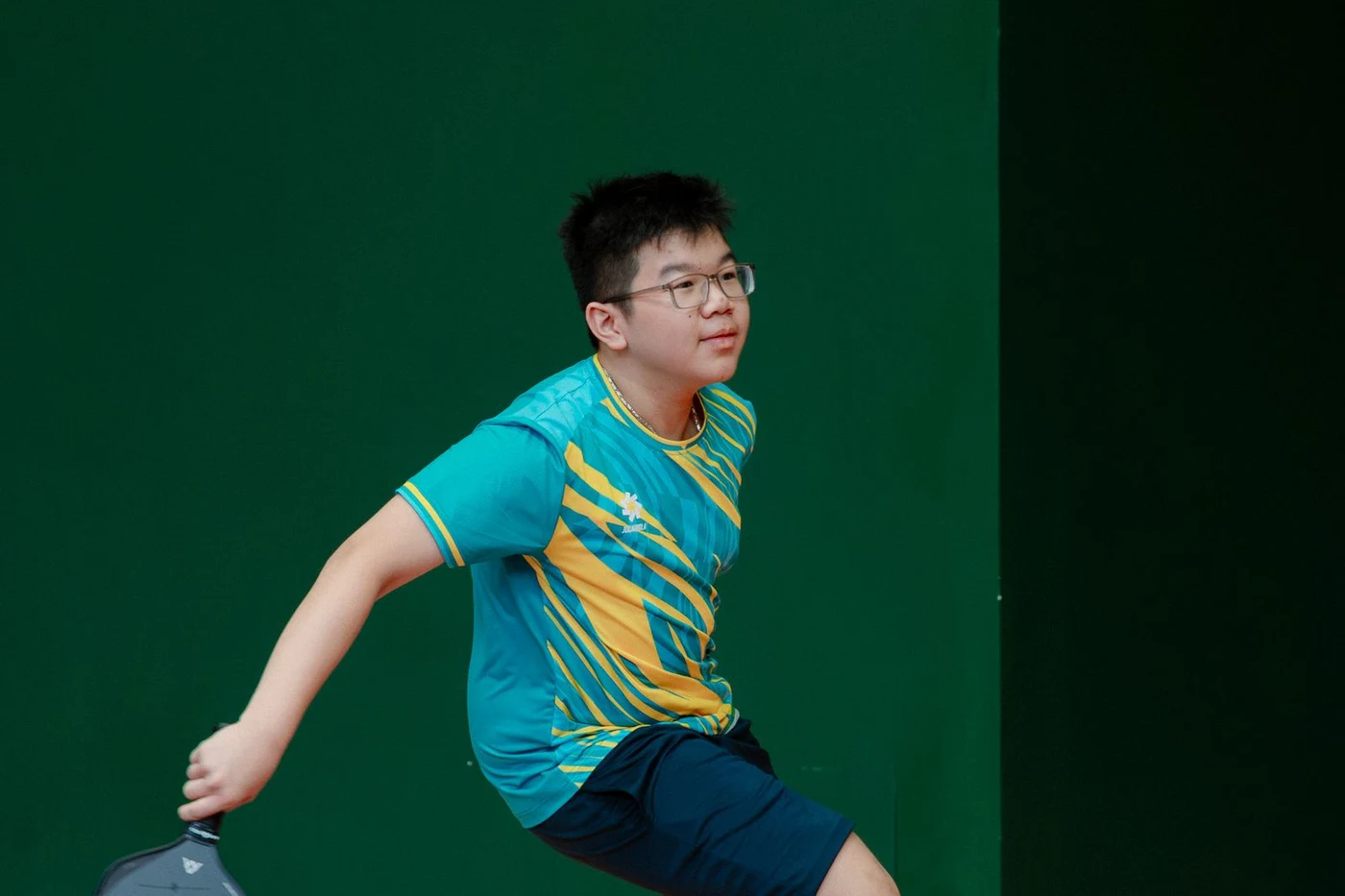
Photo: HONG SON, Pexels
Doubles pickleball means your partner changes almost every game, and most casual open-play groups track that rotation the way they track everything else early on: a whiteboard by the court, a paper queue, or just people calling out "who's next" between games. It works when you've got one court and eight people. It stops working the moment you've got three courts running and a growing line of people waiting their turn.
Why the informal version breaks down
- Nobody can see who's actually waited longest. Without a visible queue, "I was here before you" turns into a genuine dispute, not a joke.
- The same players keep pairing up. Without something tracking who's already partnered with who this session, the two strongest players in the group tend to keep landing together — not out of bias, just because it's easy to default to a familiar pairing.
- Quiet players wait the longest. An informal, shout-based queue rewards whoever's most comfortable pushing to get back on court — which is rarely the newest or quietest player in the group.
What a fairer rotation actually needs
- A real queue drawn from who's genuinely present and waiting, not a guess.
- Randomized partner pairing as the default, so the same two strong players aren't automatically stacked together game after game.
- Room for a manual override when there's a real reason — a beginner's first session, a clear skill mismatch — without that becoming the norm instead of the exception.
- Visibility for everyone, so "whose turn is it?" has an obvious answer instead of needing to ask.
There are good dedicated round-robin generators out there for formal tournaments — fixed player counts, printable brackets, live standings. That's a different job. Casual weekly open play isn't a tournament: people arrive late, leave early, and sit out a game to grab water, and the rotation needs to keep working through all of that, not just at kickoff.
Jum's team formation draws from who's actually confirmed as attending, auto-assigns pairings, and lets an organizer manually adjust when there's a real reason to — then publishes it so everyone can see it, instead of relying on a whiteboard or a shouted "next up."
The goal isn't to make rotation feel mechanical — it's to remove the parts that shouldn't need a queue-jumping argument in the middle of a session that's supposed to be fun.
Quick questions
What's a fair way to rotate pickleball partners in open play?
Draw the rotation from who's actually present and waiting, not a guess, and randomize partner pairings by default so the same strong players don't keep landing on the same side out of habit.
Do you need round robin tournament software for casual open play?
Not usually — dedicated round-robin generators are built for formal brackets with a fixed player count, while casual open play needs a rotation that can handle people arriving, leaving and waiting throughout the session.
How do you stop the same two players from always partnering together?
Randomize the default pairing instead of letting players self-select or repeat familiar partnerships, and only override it manually when there's a clear reason to.
See how team formation works → Walk through the full event flow →